
What Is a Kaolin Rotary Dryer?
A kaolin rotary dryer is industrial drying equipment used to reduce the moisture content of kaolin clay before grinding, screening, storage, packing, or further processing. It is commonly used in kaolin processing plants, clay drying plants, mineral powder production lines, and other industrial material drying projects.
Kaolin clay usually contains a certain amount of moisture after mining, washing, filtering, or natural storage. If the moisture is too high, the material may become sticky, difficult to feed, hard to grind, and unstable during screening or packing. For many plants, drying is not only a preparation step. It directly affects the smooth operation of the following process.
A rotary dryer is suitable for continuous kaolin clay drying because the rotating drum keeps the material moving while hot air removes moisture from the wet clay. Compared with simple drying methods, a rotary drum dryer provides a more controlled and stable process for industrial production.
At Staurk, Henan Staurk Machinery Co.,Ltd provides mineral drying equipment and plant solutions for kaolin, clay, ore, mineral powder, and other industrial materials. For kaolin drying projects, we focus on practical equipment selection based on material moisture, capacity, heat source, dust collection, and site conditions.
How a Kaolin Rotary Dryer Works
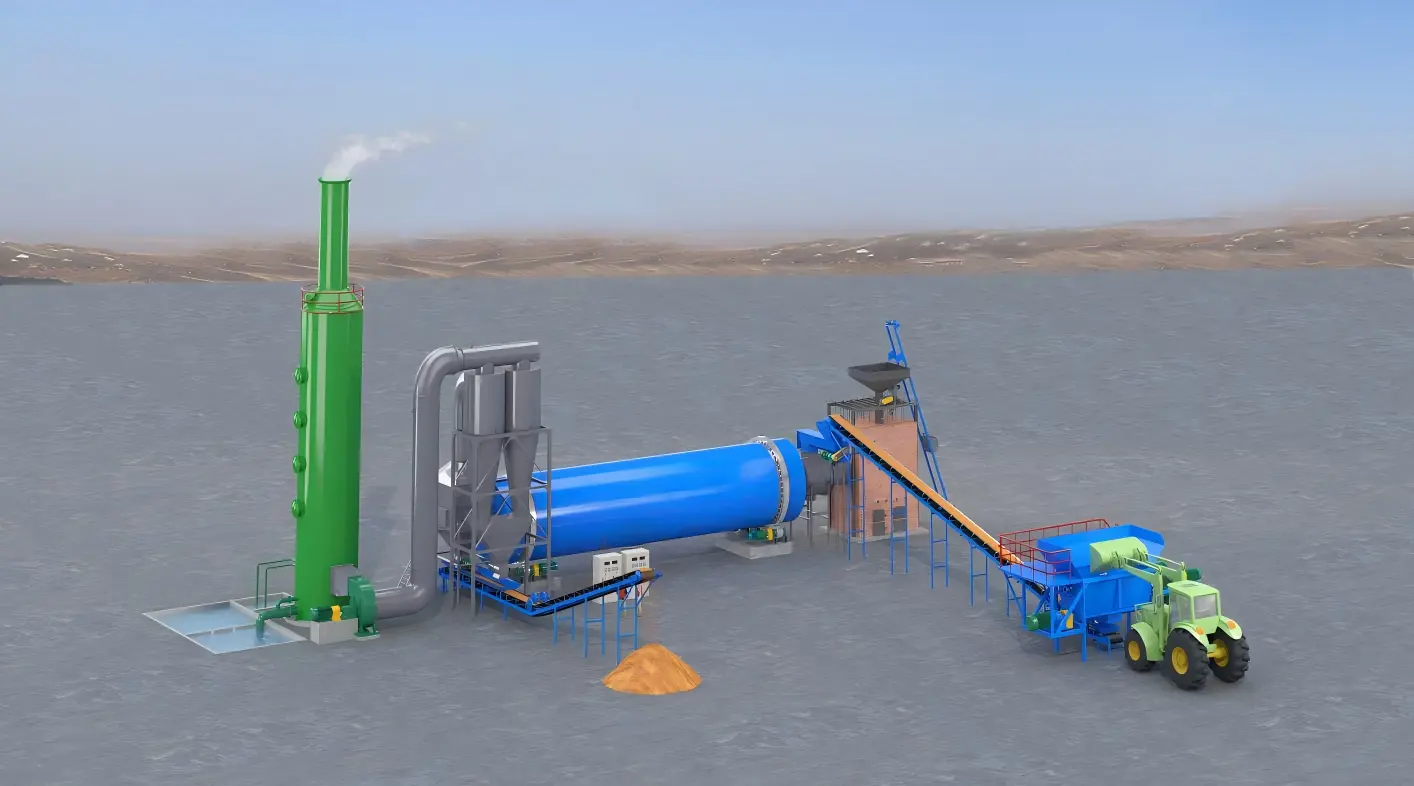
In a typical clay drying process, wet kaolin is sent into the rotary dryer through a feeder or conveyor. The dryer drum is installed at a slight inclination, allowing the material to move gradually from the feeding end to the discharge end.
As the drum rotates, internal lifting plates lift and drop the wet kaolin repeatedly. This movement helps spread the material and increases contact between the clay and hot air. The heat source may come from a hot air furnace, burner, or other heating system, depending on the fuel available at the project site.
During the drying process, moisture evaporates from the kaolin clay. The dried material is discharged from the outlet and can then be sent to grinding, screening, storage, or packing equipment.
Dust collection is also important in a kaolin rotary dryer system. Fine particles may be carried by the exhaust gas, especially when the material becomes drier. A cyclone dust collector, bag filter, induced draft fan, and air duct system may be used depending on the project requirements.
For this reason, a kaolin rotary dryer should not be considered as only one machine. It usually works together with feeding equipment, heat source equipment, dust collection equipment, conveying equipment, and downstream processing equipment.
Key Factors When Selecting a Kaolin Rotary Dryer
When selecting a kaolin rotary dryer, the most important details are the initial moisture content, required final moisture, processing capacity, feed size, and material stickiness. These factors affect the dryer size, drying time, heat demand, feeding method, and discharge design. For kaolin clay with high moisture or strong stickiness, the dryer should be matched carefully to reduce material sticking, uneven drying, or unstable output moisture.
The heat source and dust collection system should also be considered from the beginning. Fuel availability, operating cost, site layout, and local environmental requirements will influence the final drying solution. A suitable kaolin rotary dryer should work together with the heating system, fan, dust collector, conveyor, and downstream equipment, rather than being selected as a single isolated machine.
How Staurk Helps with Kaolin Dryer Selection
For a kaolin drying project, Staurk usually starts by reviewing the basic project information rather than recommending a dryer only by price or drum diameter. Important details include raw material type, initial moisture, required final moisture, feed size or lump size, processing capacity, heat source, installation site, and dust collection requirements.
Based on these details, Staurk can help recommend a suitable kaolin rotary dryer and related equipment. For some projects, customers may only need a single rotary dryer to upgrade an existing drying section. For other projects, the dryer may need to be supplied together with the feeding system, hot air system, dust collector, fan, conveyor, and control system.
This process-based selection is useful for clay processing plants, mineral processing projects, EPC contractors, and equipment buyers who need a practical drying solution instead of only a standard machine quotation.
Conclusion
A kaolin rotary dryer is a key machine in a clay drying plant. It helps reduce the moisture content of kaolin clay and prepares the material for grinding, screening, storage, packing, or further processing.
When selecting a rotary dryer for kaolin clay, buyers should consider initial moisture, final moisture, capacity, material stickiness, lump size, heat source, dust collection, and site conditions. Choosing a dryer only by price or machine size may lead to unstable operation, uneven drying, high fuel consumption, or equipment mismatch.
If you are planning a kaolin clay drying project, it is better to evaluate the dryer as part of the complete drying process. A suitable drying system should match both the material characteristics and the downstream production requirements.