
What Is a Screw Sand Washer?
A screw sand washer is a sand washing machine used to remove clay, mud, dust, and other impurities from sand materials. It is commonly used in river sand washing, natural sand processing, crushed sand washing, aggregate production, and mineral washing plants.
This equipment is also often called a spiral sand washer. In many projects, both names refer to similar washing equipment that uses a rotating spiral blade to clean and discharge sand. For B2B buyers, the key point is not the name only, but whether the machine can match the raw material condition, washing requirement, capacity, water supply, and downstream dewatering process.
For river sand washing, the screw sand washer is usually used to improve sand cleanliness and reduce mud content before stockpiling, transportation, or further processing. It can be used as a single washing machine or as part of a complete sand washing plant.
At Staurk, Henan Staurk Machinery Co.,Ltd provides sand washing equipment and mineral washing plant solutions for river sand, natural sand, crushed sand, and other aggregate materials. For sand washing projects, we focus on practical equipment selection based on material condition, capacity, washing effect, site layout, and water use.
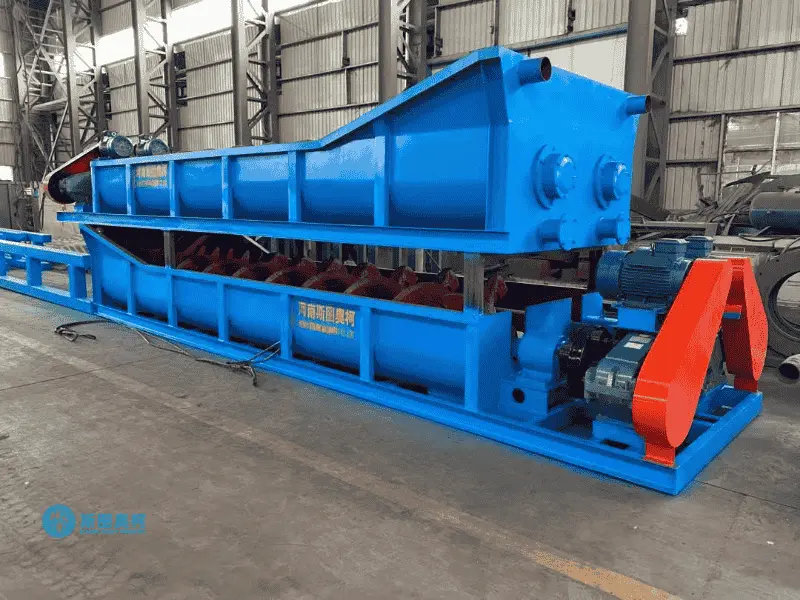
How a Screw Sand Washer Works
In a typical river sand washing process, wet sand or mixed sand material enters the washing tank of the screw sand washer. The spiral blade rotates slowly inside the tank and pushes the sand upward toward the discharge end.
During this process, water helps wash away clay, mud, fine particles, and light impurities. The muddy water and fine waste material overflow from the tank, while the cleaner sand is lifted and discharged by the screw blade.
The structure is relatively simple, but the washing effect depends on several factors, including raw sand condition, mud content, water volume, screw speed, tank design, and residence time. If the sand contains high clay content or sticky mud, the washing system may need to be matched with screening, pre-washing, or dewatering equipment.
After washing, the discharged sand usually contains some moisture. In many river sand washing plants, the screw sand washer can work together with a dewatering screen to reduce water content and improve the final sand quality. Belt conveyors are often used for feeding, discharge, and stockpiling.
For this reason, a screw sand washer should not always be treated as a completely independent machine. It often works better when matched with vibrating screens, dewatering screens, conveyors, water circulation systems, and other sand washing plant equipment.
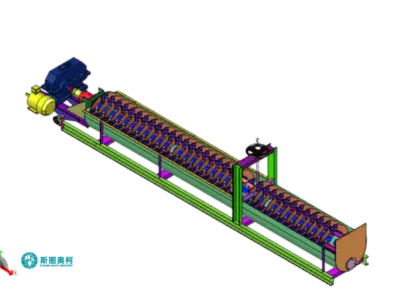
Key Factors When Selecting a Screw Sand Washer
When selecting a screw sand washer for river sand washing, the first thing to consider is the raw material condition. River sand may contain different levels of mud, clay, fine particles, shells, organic matter, or other impurities. If the mud content is high, a simple washing machine may not be enough, and the process may need stronger washing or additional dewatering equipment.
Processing capacity is also important. Buyers should clarify the required tons per hour, feed size, water availability, and expected final sand cleanliness. The screw sand washer, feeding equipment, water system, discharge conveyor, and dewatering equipment should be matched as one process. If one part is undersized, the whole sand washing line may fail to reach the expected output.
Water condition should also be considered from the beginning. Sand washing requires a stable water supply, and many projects need a water recycling or settling system to reduce water consumption. For sites with limited water resources, the washing process should be designed more carefully.
The final sand requirement is another key factor. Some customers only need to remove visible mud and impurities, while others need cleaner sand for construction aggregate, concrete sand, or further mineral processing. The selection of the screw sand washer should match the real application, not only the machine price.
Screw Sand Washer in a River Sand Washing Plant
In a river sand washing plant, the screw sand washer is usually installed after screening or feeding equipment. The sand may first pass through a vibrating screen to remove oversized material. Then the qualified sand enters the washer for cleaning.
A common process may include feeding, screening, washing, dewatering, conveying, and stockpiling. If the sand contains a large amount of mud or fine particles, the plant may also include a settling pond, water recycling system, or additional fine sand recovery equipment, depending on project requirements.
For small and medium sand washing projects, a screw sand washer can be a practical choice because it has a simple structure, stable operation, and can complete washing and basic dewatering at the same time. For higher output or stricter final sand quality, it may need to be combined with dewatering screens and other equipment.
The right configuration depends on raw sand type, mud content, required capacity, available water, site layout, and final product requirements. This is why equipment buyers should evaluate the screw sand washer together with the complete river sand washing process.
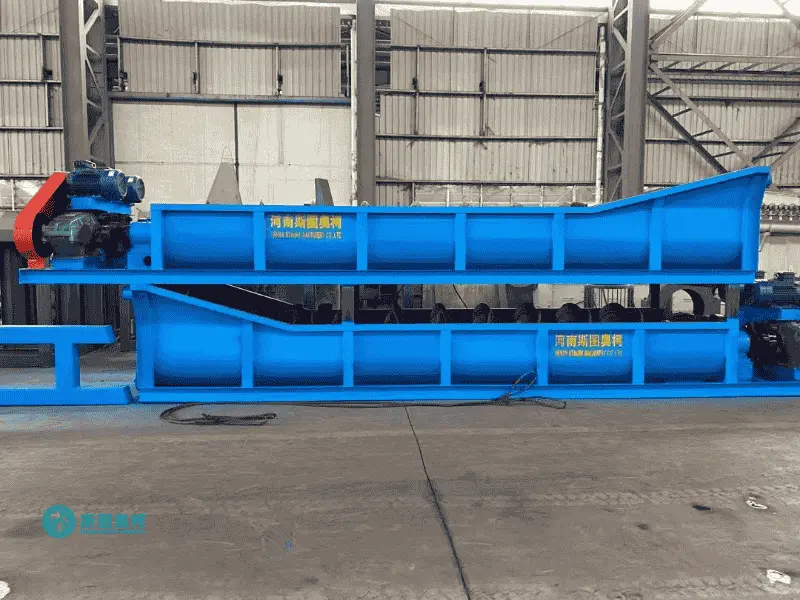
How Staurk Helps with Sand Washer Selection
Before recommending a screw sand washer, Staurk usually needs to understand the basic project information, including raw sand type, mud content, feed size, processing capacity, water condition, required final sand quality, and whether dewatering is needed.
Based on these details, Staurk can help recommend suitable sand washing equipment and related machines. Some customers may only need one screw sand washer for a simple washing process. Other projects may require a complete sand washing plant with feeder, vibrating screen, screw sand washer, dewatering screen, belt conveyor, and water treatment system.
For mining companies, aggregate producers, contractors, and equipment distributors, this process-based selection can help avoid equipment mismatch and improve plant operation. A suitable river sand washing solution should match both the raw material and the final use of the sand.
Conclusion
A screw sand washer is a commonly used machine for river sand washing. It can help remove mud, clay, dust, and light impurities from sand materials, while also supporting basic sand discharge and dewatering.
When selecting a screw sand washer, buyers should consider raw sand type, mud content, feed size, capacity, water supply, final sand requirement, and matching equipment. Choosing only by machine size or price may lead to poor washing effect, low output, high water consumption, or unstable plant operation.
If you are planning a river sand washing project, it is better to evaluate the screw sand washer as part of the complete sand washing process. A well-matched washing line can help improve sand cleanliness, reduce handling problems, and support more stable production.
If you need a screw sand washer for river sand washing, Staurk can help review your project requirements and recommend a practical washing solution. Please share your raw sand type, mud or clay content, feed size, processing capacity, water condition, required final sand quality, site layout, and whether dewatering is required. Based on these details, Henan Staurk Machinery Co.,Ltd can provide a suitable screw sand washer recommendation and sand washing plant solution.