
Ball Mill for Gold Processing Plant: Gold Ore Grinding and Mineral Processing
What Is a Ball Mill for Gold Processing Plant?
A ball mill for gold processing plant is a grinding machine used to grind crushed gold ore into finer particles before separation, concentration, or leaching. In a gold beneficiation plant, the ball mill is usually installed after the crushing stage and before classification, gravity separation, flotation, or cyanide leaching.
For gold ore processing, grinding is not only a simple size reduction step. It directly affects mineral liberation, recovery conditions, slurry quality, reagent consumption, and the stability of downstream equipment. If the grinding size is too coarse, part of the gold may remain locked in the gangue minerals. If the ore is over-ground, it may create excessive fine slime, increase energy consumption, and make separation more difficult.
Henan Staurk Machinery Co.,Ltd provides mineral processing equipment and complete plant solutions for gold ore crushing, grinding, classification, and beneficiation projects. For gold processing plants, we focus on practical equipment selection, process matching, and stable plant operation based on actual project requirements.
Why Ball Mills Are Used in Gold Ore Grinding
Ball mills are widely used in gold ore grinding because they can handle different ore types, support continuous operation, and work well in wet grinding circuits. A gold ore ball mill can be used for rock gold ore, sulfide gold ore, oxidized gold ore, and some mixed gold ores, depending on the process flow and ore test results.
Compared with some simple grinding equipment, a mineral processing ball mill is more suitable for projects that require stable capacity, controlled discharge size, and long operating hours. It can be matched with classifiers to form a closed grinding circuit, which helps control the final particle size and reduce unnecessary over-grinding.
For overseas mining companies, EPC contractors, and equipment buyers, the ball mill is usually not evaluated as a single machine only. It should be considered together with the full gold processing plant equipment system, including crushers, feeders, classifiers, pumps, flotation machines, gravity separation equipment, thickeners, and other related machines.
Typical Position of Ball Mill in a Gold Processing Plant
In a typical gold processing plant, raw ore first enters the crushing section. A jaw crusher is commonly used for primary crushing. Depending on the ore hardness and required feed size, cone crushers, impact crushers, hammer crushers, or fine crushers may be used for secondary or fine crushing.
After crushing and screening, the ore is fed into the grinding section. The ball mill grinds the crushed ore with water and grinding media to produce slurry. The slurry is then sent to a spiral classifier, hydrocyclone, or other classification equipment. Coarse particles return to the ball mill for regrinding, while qualified fine particles move to the next beneficiation stage.
This closed-circuit grinding system is common in many gold ore beneficiation plants. It helps maintain a more stable grinding fineness and supports the downstream recovery process. For this reason, the ball mill should be matched with the crushing equipment, classification equipment, and recovery method, rather than selected only by capacity or price.
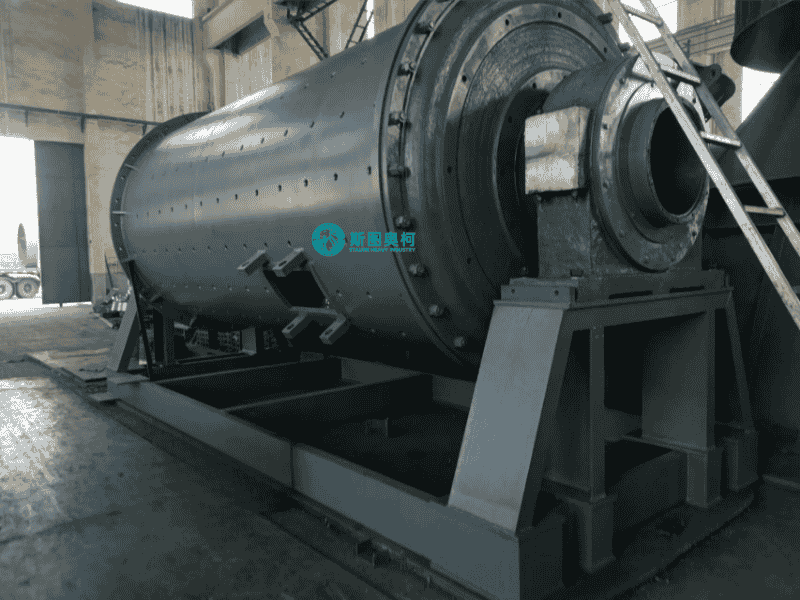
Wet Ball Mill for Gold Ore Grinding
A wet ball mill for gold ore is commonly used in mineral processing plants because most gold recovery processes require slurry preparation. Wet grinding can reduce dust, improve material flow, and make it easier to send the ground ore to flotation cells, shaking tables, centrifugal concentrators, leaching tanks, or other equipment.
In wet grinding, crushed ore, water, and grinding media are added into the rotating cylinder of the ball mill. As the cylinder rotates, the grinding media impacts and grinds the ore. The ground slurry is discharged from the mill and then classified according to particle size.
Wet ball mills are often used before flotation, gravity separation, and cyanide leaching. However, the slurry density, water ratio, discharge method, grinding time, and classification system should be adjusted according to the ore characteristics and processing requirements.
For some gold projects, especially small and medium-sized plants, wet ball milling is a practical choice because it can be integrated into a complete gold processing plant solution with relatively clear process control.
Key Factors When Choosing a Ball Mill for Gold Processing
Choosing a suitable ball mill for gold processing is not simply about selecting a machine with a larger size or higher motor power. The correct selection should be based on ore properties, plant capacity, grinding requirements, process flow, and site conditions.
Ore hardness and feed size
- Gold ore hardness has a direct influence on grinding efficiency, power consumption, and liner wear. Quartz-rich gold ore is often harder and more abrasive, while oxidized ore may be easier to grind but may produce more fine particles.
- Feed size is also important. A ball mill is designed for grinding, not for replacing the crushing stage. If the feed size is too large, the grinding efficiency will decrease, energy consumption may increase, and the liner may wear faster. A properly designed crushing circuit can provide a suitable feed size for the gold ore ball mill.
Required grinding fineness
Different gold recovery methods require different grinding sizes. Gravity separation may not always require very fine grinding, especially when gold particles are relatively coarse and can be recovered by shaking tables, jigs, or centrifugal concentrators.
Flotation and cyanide leaching usually require finer grinding because gold-bearing minerals need to be better exposed. The required grinding fineness should be confirmed by ore testing when possible. In real projects, the target particle size depends on gold occurrence, ore texture, mineral composition, and the selected beneficiation method.
Processing capacity
Processing capacity is one of the main concerns for equipment buyers. A small gold beneficiation plant may require a compact grinding system, while a larger plant may need a higher-capacity ball mill and a more complete classification system.
When evaluating capacity, buyers should consider not only tons per hour, but also working hours per day, feed size, ore moisture, circulating load, slurry density, and downstream equipment capacity. If the grinding section is not matched with the rest of the plant, the whole gold processing line may become unstable.
Liner and grinding media
The liner and grinding media affect grinding efficiency, maintenance frequency, and operating cost. For abrasive gold ore, wear resistance is an important factor. The liner design can also affect the movement of material and grinding media inside the mill.
Grinding media size and filling ratio should be selected according to the feed size and required output size. In many projects, these details may be adjusted during commissioning to improve grinding performance and plant stability.
Matching with classification equipment
A ball mill usually works with a spiral classifier or hydrocyclone to form a closed grinding circuit. The classifier separates coarse and fine particles. Coarse material returns to the ball mill, while qualified slurry enters the next processing stage.
If the classification equipment is not properly matched, the grinding circuit may face problems such as coarse discharge, over-grinding, high circulating load, unstable slurry concentration, or low processing efficiency. Therefore, the ball mill and classifier should be considered together during plant design.
Ball Mill and Other Equipment in a Gold Processing Line
A gold processing line is not built around one machine only. The ball mill must work together with crushing, screening, feeding, classification, separation, thickening, and conveying equipment.
For the crushing section, jaw crushers are often used for primary crushing. Cone crushers or other secondary crushers may be selected depending on ore hardness and required feed size. Vibrating screens help control particle size before the grinding section.
After grinding, the slurry may enter gravity separation equipment, such as shaking tables, jig concentrators, or centrifugal concentrators. If the gold ore contains sulfide minerals, flotation machines may be used to recover gold-bearing concentrates. For some projects, the ground slurry may enter a cyanide leaching process after classification and thickening.
For a complete gold processing plant, Staurk can help match the ball mill with crushing equipment, classification equipment, flotation equipment, gravity separation equipment, and other mineral processing machines according to the selected process flow. This is especially important for gold projects where grinding fineness, slurry handling, and downstream recovery methods directly affect plant performance.
Common Applications in Gold Beneficiation Plants
A ball mill for gold processing plant can be used in different types of gold beneficiation projects. In rock gold processing, it is commonly used after crushing to grind the ore before gravity separation, flotation, or leaching.
For coarse gold ore, the ball mill may be used together with gravity separation equipment to recover free gold particles. For sulfide gold ore, ball milling is often used before flotation to improve mineral liberation. For fine-grained gold ore, the grinding section may need to prepare suitable slurry for leaching or combined recovery processes.
In small and medium-sized gold processing plants, ball mills are often selected because they are widely used, suitable for continuous production, and can be matched with different process flows. In larger projects, the grinding system may use multiple mills, hydrocyclone classification, and more detailed process control depending on the plant capacity and ore properties.
Ball mills can also be used for upgrading existing gold processing plants. If the current grinding size is too coarse, plant capacity has increased, or recovery performance is unstable, the grinding and classification circuit may need to be reviewed and improved.
How to Select a Suitable Ball Mill for Your Gold Project
Before selecting a ball mill for gold ore grinding, buyers should prepare basic project information. Important details include ore type, raw ore size, crushed feed size, required output size, ore hardness, moisture condition, processing capacity, and preferred beneficiation method.
When Staurk reviews a gold grinding project, we usually consider the ore type, feed size, required grinding fineness, processing capacity, downstream recovery method, and site conditions together. This helps avoid selecting a ball mill only by price or motor power. A suitable gold ore ball mill should match the complete processing flow, not only the grinding capacity.
For EPC contractors and mining equipment buyers, it is also helpful to provide information about the planned process route, site layout, water supply, power supply, and installation conditions. These details help the supplier recommend a more practical ball mill and related gold processing plant equipment.
If the project is still at an early stage, it is better to discuss the complete gold ore beneficiation plant solution instead of asking only for a ball mill price. A complete process review can help avoid equipment mismatch, unnecessary investment, and unstable operation after installation.
Conclusion
The ball mill plays an important role in gold ore grinding and mineral processing. It helps prepare crushed gold ore for gravity separation, flotation, cyanide leaching, or combined beneficiation processes. A properly selected ball mill can support better mineral liberation, more stable slurry preparation, and smoother downstream operation.
For gold processing plants, the ball mill should not be selected only by machine size or purchase cost. Ore hardness, feed size, grinding fineness, processing capacity, liner design, grinding media, classification equipment, and downstream recovery methods all need to be considered.
If you are planning a new gold beneficiation plant or upgrading an existing gold ore grinding system, evaluating the ball mill together with the complete plant flow is a more practical approach. A well-matched grinding and classification system can help improve plant stability and support long-term operation.
FAQ
What is the role of a ball mill in a gold processing plant?
A ball mill grinds crushed gold ore into finer particles so that gold minerals can be better liberated before gravity separation, flotation, or leaching. It is usually part of the grinding and classification section in a gold processing plant.
Is wet ball mill suitable for gold ore?
Yes. Wet ball mill is widely used for gold ore grinding because most gold processing methods require slurry preparation. It is suitable for many gold beneficiation plants, depending on ore type, grinding requirements, and process design.
What particle size can a ball mill grind gold ore to?
The final particle size depends on ore hardness, feed size, grinding time, mill configuration, grinding media, and classification equipment. The required grinding fineness should be selected according to the gold recovery method and ore test results.
How to choose a ball mill for a gold beneficiation plant?
To choose a suitable ball mill, you should consider ore hardness, crushed feed size, required grinding fineness, processing capacity, liner and grinding media, classification method, and downstream beneficiation process.
Can a ball mill be used with flotation or gravity separation?
Yes. A ball mill can be used before flotation, gravity separation, cyanide leaching, or a combined process. The grinding fineness should match the selected gold recovery method and the characteristics of the ore.
Get a Tailored Gold Grinding Solution
If you are planning a gold processing plant or upgrading an existing gold ore grinding system, Staurk can help review your project requirements and recommend suitable mineral processing equipment. Please share your ore type, processing capacity, feed size, required output size, and preferred processing method, such as gravity separation, flotation, cyanide leaching, or a combined process. Based on these details, Henan Staurk Machinery Co.,Ltd can provide a suitable ball mill recommendation and a complete gold processing plant solution.