
Choosing a rotary drum dryer for sawdust is not merely about purchasing a machine; it involves tailoring a drying system to your specific raw materials, site conditions, and budget. This choice determines whether your sawdust transforms into high-value fuel pellets or remains mere waste. Choosing a dryer requires balancing heat, airflow, material retention time, and emission standards. Only by carefully considering these interconnected factors can the equipment become a reliable, efficient asset that ensures a quick return on investment. Henan Staurk Machinery Co.,Ltd is here to design the optimal solution for you.
Define the Drying Requirement
First, clearly define your core requirements: what is the intended use of the final product? Will the dried sawdust be used for pelletizing, briquetting, board manufacturing, or as biomass fuel? Different applications demand vastly different final moisture content levels. You must also identify the available heat source—such as wood scraps, biomass pellets, natural gas, or coal—as this directly influences the selection of the hot air furnace and long-term operating costs. Additionally, assess your facility's spatial constraints to determine if a compact design is needed to minimize the footprint and simplify installation.
Understand the sawdust and Its Moisture Condition
The difficulty of drying sawdust depends on several factors, so understanding your raw material characteristics beforehand is essential. First is particle size distribution: is it fine sawdust from a furniture factory, or coarse wood chips and offcuts from timber processing? Rotary drum dryers are well-suited for materials like sawdust, rice husks, and wood shavings; the drum's rotation tumbles the material, ensuring uniform heat exposure. Second is the initial moisture content; fresh sawdust often fluctuates significantly between 35% and 60% (wet basis), and higher input moisture requires greater evaporation capacity. Finally, determine the target moisture content: pellet fuel typically requires 10%–15%, while material for pelletizing or board production is usually kept between 8% and 12%. The lower the target moisture, the greater the drying difficulty and energy consumption.
Confirm the Capacity and Drum Size
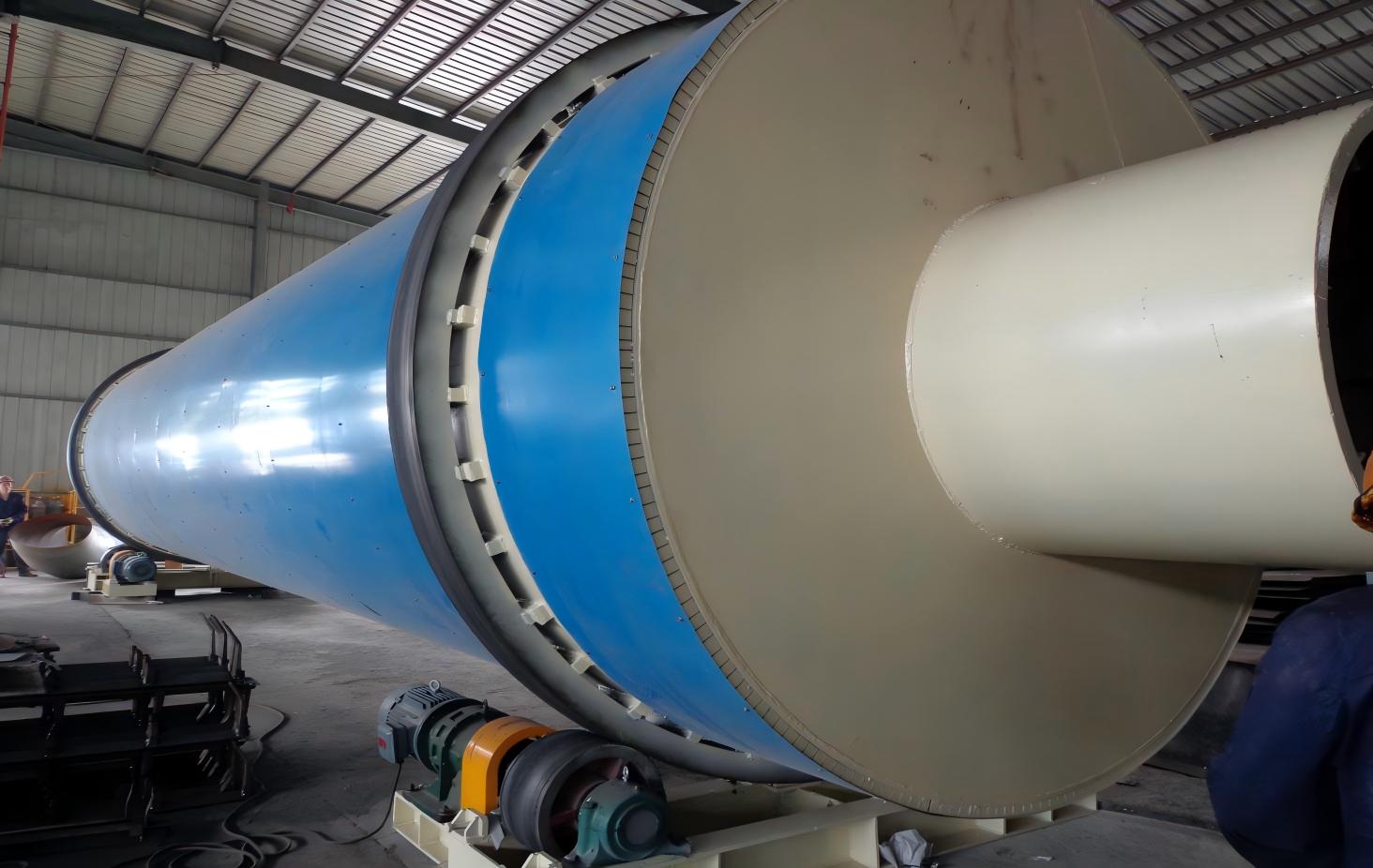
Determining production capacity and drum dimensions is essentially about matching the dryer's "throughput capacity" with the required "degree of drying." The drum diameter determines the width and thickness of the "material curtain" formed across the cross-section, effectively setting the physical upper limit for the equipment's hourly processing capacity; meanwhile, the drum length directly dictates the material's "effective residence time" within the high-temperature environment. A larger diameter allows for a greater volume of material to contact the hot air per unit of time, thereby raising the baseline production capacity; a greater length increases the frequency with which the material is lifted and cascaded by the internal flights, resulting in more thorough moisture evaporation. When selecting equipment, one must consider the production target alongside the raw material's initial moisture content and the required final moisture level: achieving both high output and deep drying requires a drum with both a large diameter and sufficient length; conversely, if output requirements are modest but the final product must be extremely dry, priority should be given to drum length rather than simply increasing the diameter. Only through the synergistic matching of these parameters can the dryer strike the optimal balance between production capacity and drying performance.
Select the Matching Equipment
Once requirements and production targets are defined, attention should be paid to the following key specifications. First is the drum structure: single-pass designs are simple and require lower initial investment, whereas triple-pass dryers offer a longer material travel path, typically achieving 15%–25% higher thermal efficiency than single-pass units while occupying less floor space—making them more cost-effective in the long run. Second are thermal efficiency and energy consumption, which directly determine long-term operating costs; by optimizing the internal lifting flights and hot air flow, triple-pass models can achieve energy savings of approximately 30%–50%. Regarding temperature control, higher is not necessarily better for sawdust drying; it is recommended to maintain the hot air inlet temperature within the 150°C–180°C range to avoid odors caused by scorching and to minimize the risk of dust-related issues. Finally, consider dust removal and environmental protection systems: a cyclone dust collector should be installed to pre-separate larger dust particles, thereby reducing the load on downstream dust collection equipment and minimizing pipeline wear.
How a Sawdust Rotary Drum Dryer Works
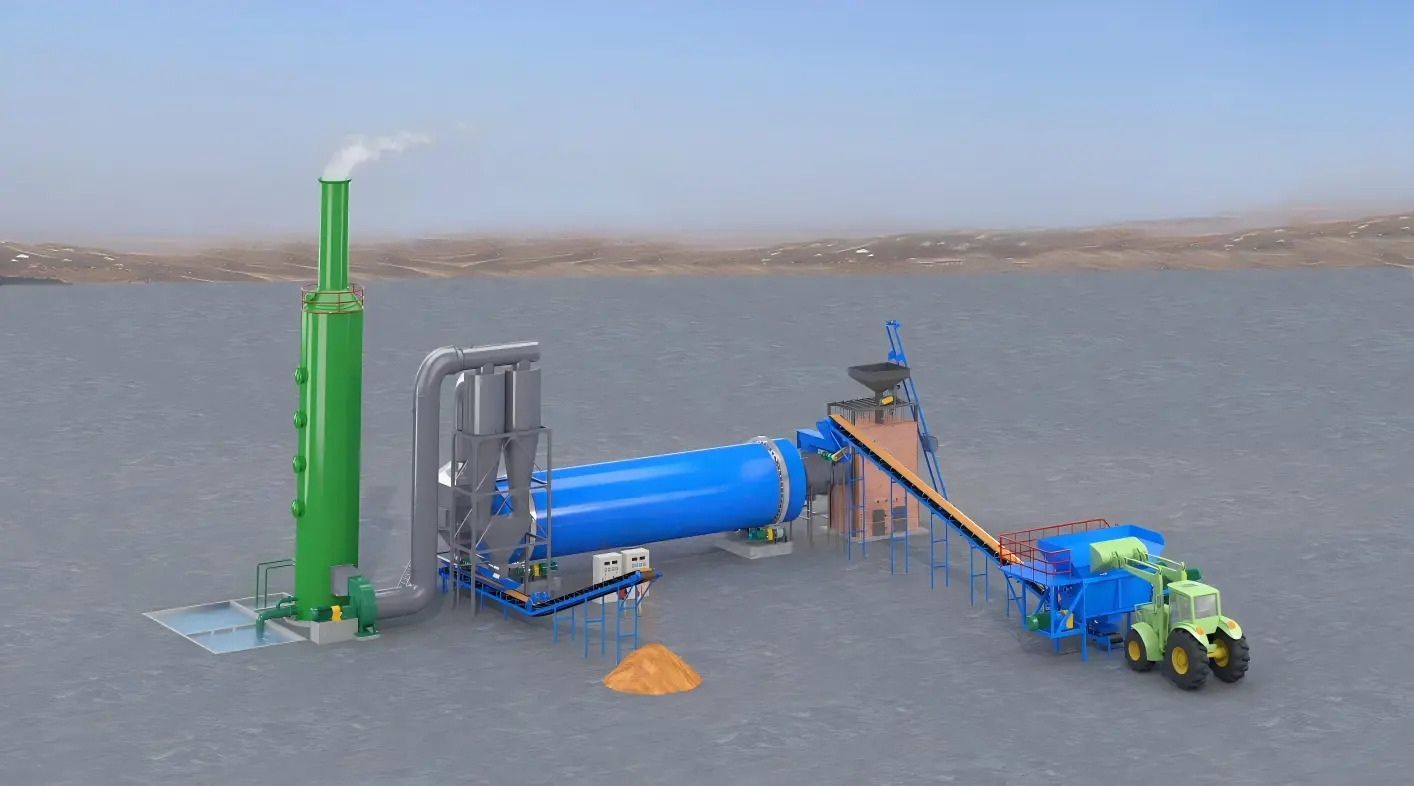
The core of the equipment is a cylindrical drum installed at a slight incline relative to the horizontal plane. Wet sawdust is fed in at the higher end, while hot air enters from either the same end (co-current flow) or the opposite end. As the drum rotates, internal lifting flights (lifters) continuously scoop up and shower down the wood chips, creating a "curtain of material" that ensures full contact between the hot air and the material, thereby accelerating moisture evaporation. Driven by the combined effects of gravity and drum rotation, the wood chips slowly move toward the lower end. The dried wood chips are discharged from the bottom end with a controllable moisture content of 8%–15%, while the moisture-laden exhaust gas is purified by a dust collector before being vented.
Conclusion
The key points for selecting a rotary drum dryer for wood chips can be summarized as follows: calculate the required evaporation capacity before considering the total processing throughput, determine equipment specifications by working backward from "raw material moisture → target moisture → required evaporation," and include a safety margin to handle fluctuations; a three-pass structure is more energy-efficient than a single-pass design, offering energy savings of 15%–25% during long-term operation; temperature control is more critical than simply using high heat—an optimal range of 150°C–180°C ensures efficient evaporation while preventing material charring and quality degradation; the hot air furnace, drum, fan, and dust collector must be properly matched and integrated, as focusing solely on the "machine" itself can lead to pitfalls. A systematic approach to equipment selection is essential to ensure long-term, stable, and efficient operation.